Kenya: Green Belt Movement
(BioCarbon Fund)
|
Degraded public land in the background (Photo: GBM) |
The project proposes to reforest 4,000 ha of degraded public land and private land with high community access in the Aberdare Range and Mount Kenya watersheds in Kenya. The project area encompasses lands in the Reserve and in surrounding areas. Lands in the Reserve have been deforested for charcoal production or for conversion to illegal agriculture and cattle grazing. The Forests are also threatened by illegal logging activities. The project will pay local communities and provide them with the technology and knowledge to reforest these lands and manage the new forest. Communities will be organized in Community Forest Associations (CFAs) that will participate to each step of the project and develop management plans. The long term goal is to use the re-grown forest in a sustainable manner for a variety of products including fuel wood, charcoal, timber, medicinal and other uses. The Green Belt Movement (GBM) has developed this technique and has been using it in the region for several years with success. Carbon payments will allow GBM to expand this technique and its benefits to additional areas. The project will particularly benefit from GBM's experience and from its well established network of tree nurseries and formed groups in the region.
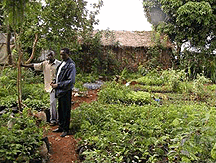 |
A GBM nursery (Photo: GBM) |
The project is expected to sequester around 0.19 Mt CO2e by 2012 and 0.79 Mt CO2e by 2017. The project is targeting specifically denuded steep sloped lands in important water catchment areas. The reforestation will therefore bring important environmental benefits by reducing the erosion process, protecting the water sources, and regulating water flows. Biodiversity will also benefit from the re-introduction of a wide range of natural tree species. Local farmers will enjoy a direct improvement of their income through the payments for environmental services. Indirect social benefits will also stem from the forest products and improved social organization and capacities. The plantations method will allow for integration of the various farmers activities to reduce potential leakage. Permanence will be secured through the strong involvement of and benefits to communities.
GBM will develop the project and will also participate to its financing with its members. Other sources of financing are being determined. The Green Belt Movement has been working with the local populations in the region since 1977. It has particularly been changing the local population's attitudes to forest exploitation through training and the provision of the technology, funding and knowledge for tree planting on private and public lands.
|


