|

Projects List
Guyana: Skeldon Sugar Modernization
(Community Development Carbon Fund)
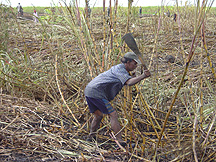
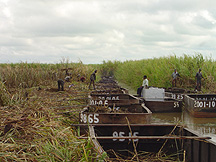
The Skeldon Sugar Modernization Project (SSMP) is located in the Berbice region of Guyana. The colony of Berbice was settled by the Dutch in 1752, and was officially ceded to the United Kingdom in 1814 (later becoming part of what was known as British Guiana). Following the abolition of slavery in 1834, thousands of indentured laborers were brought to Guyana to replace the slaves on the sugarcane plantations, mainly from India but also from Portugal and China. The descendants of these workers continue to live and work in the Berbice region, and will be primary beneficiaries of a more stable electricity supply and the additional employment provided by this CDCF-supported project: the first Carbon Finance Business project using bagasse as fuel to produce electrical power for internal needs, and for sale to the national grid in the process known as co-generation.
Fortunately, Guyana’s unique climate enables a two-season sugar cane harvesting cycle, allowing bagasse to be fed into a cogeneration facility year round. As a result, there is a constant flow of electricity to the grid, which also provides a stable revenue stream to the troubled sugar industry.
The modern sugar factory to be constructed on the Skeldon Sugar Estate will produce Very High Pol (VHP) raw sugar (high quality raw sugar that is in great demand on the international market); the bagasse will be used to generate an average of 10 megawatts of electricity delivering approximately 77 gigawatt hours a year, to start. If the supply of sugar cane and bagasse grows, and if the demand for electricity rises, then more electric power could be produced as needed. The proposed project will displace the use of light fuel oil and heavy fuel oil in diesel engine driven generators operated by Guyana Power and Light Company. The CDCF intends to purchase emission reductions of 500,000 tons of carbon dioxide equivalent over a ten-year period.
Situated on the northern coast of South America, Guyana is the only English-speaking country on the continent. With an area about the size of the United Kingdom and a population of less than one million, Guyana is sparsely populated. Around 90 percent of the population lives along the coastal belt. The interior of the country contains pristine tropical forests and extensive mineral deposits. The incidence of poverty, at 35 percent of the population, is among the highest in the Western Hemisphere. Most of the rural poor are selfemployed in agriculture or work as manual laborers. Sugar is the most important primary product in Guyana’s traditional sector (including rice, bauxite, gold and timber). It contributes 16 percent of the country’s gross domestic product and 23 percent of export earnings. The sugar industry is the biggest corporate contributor to public revenue; it also directly employs 25,000 people or about 10 percent of Guyana’s labor force.
Bagasse: from Refuse to Fuel
Bagasse is the matted cellulose fiber residue from sugar cane that has been processed in a sugar mill. Previously, bagasse was seen as garbage and burned as solid waste. However as the cost of fuel oil, natural gas and electricity has increased, bagasse has come to be regarded as a fuel, rather than as refuse.
Community Benefits Plan
Since the project's conception in 1999, there have been joint consultative meetings with the local community to discuss in detail the environmental impact of the project and the development of the private farms and cooperatives. At the national level, a steering committee has been established to provide oversight and more effective communications between the project and relevant government departments. The Environmental Impact Assessment was completed in late 2004, and the Guyana Environmental Protection Agency has issued a permit allowing Guyana Sugar Corporation Inc. (GuySuCo) to proceed with the project.
Deliverables: support local hospital OR establish conservation area; direct new jobs during construction and operation; increased purchase of local construction materials; boost to local businesses; increased income; increased power supply
Timeframe: two years construction
four years operation
Cost: US$1 per ton of carbon dioxide equivalent
| Deliverables |
Description |
| Support local hospital OR establish conservation area |
GuySuCo will either support the local hospital or establish a conservation area. This community benefit will be subject to the price per ton of carbon dioxide equivalent that CDCF will pay for the carbon credits. Local people will take part in the development of these benefits. |
| Direct new jobs during construction and operation |
About 125 qualified local workers will be hired for construction of the new factory and cogeneration plant; additional work force will be required during the operation phase. |
| Increased purchase of local construction materials |
Construction materials will be purchased from two local suppliers. These materials include cement, stone, sand, steal bars, etc. The project manager will coordinate with the suppliers in securing the required amount and quality of materials. |
| Boost to local businesses |
During project construction, local traders and businesses (e.g., restaurants and hotels) will benefit with the presence of more clients (engineers and workers). |
| Increased income |
During project operation private farmers and cooperatives will benefit from increased income from increased sugar cane production to be supplied to the new factory. |
| Increased power supply |
The whole of the Berbice region will benefit from a more stable electricity supply as a result of the export of 10 megawatts of power on a firm basis. |
Monitoring Plan
The Ministry of Labor, Human and Social Services indicated its willingness to monitor the effects of the project on labor, employment, and social stability in the local area as it is expected that there will be a considerable influx of outside workers during the project construction and operation. Additionally, regular meetings with the local community will monitor social impact during the construction period and will attempt to identify and solve potential social impact problems before they arise.
|
|
|