Peru: Santa Rosa Bundled Small Hydro
UNFCCC Reference No.: 0088
 |
(Photo: The World Bank) |
Project Description:
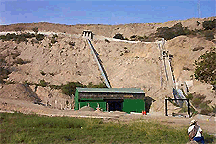
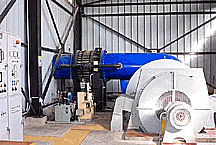
The 4.1 MW Santa Rosa Hydroelectric Project, which will use the existing irrigation infrastructure as its source of water flow, is a milestone for Peru as it is the first small-scale CDM project to be developed in that country. The proposed project is a bundle of three small run-of-river hydropower plants located in the Santa Rosa Irrigation area of Sayán District. The project will assist the national grid to reduce use of thermal plants, thereby displacing expensive heavy fuel-diesel, coal and gas fired generation-and reducing carbon dioxide emissions to the atmosphere. The CDCF will purchase 88,000 tons of carbon dioxide equivalent from the project for a total of US$440,000, with an option to purchase an additional 62,000 tons.
Current Context:
In Peru the options for hydro power are limited because most of the best locations for hydroelectric plants have been granted to private firms. As a result, new investors have limited options to invest. Thermal plants, meanwhile, offer better investment opportunities because they face fewer restrictions and can be located almost everywhere. Additionally, there are more barriers and risks in investing in an hydroelectric plant since the required investment is more than double and the construction period is one or two years more than for a thermal plant. Providing a revenue flow through carbon finance will help level that playing field.
 |
(Photo: The World Bank) |
Community Benefits Plan:
Representatives from the village of La Merced were consulted in determining what would be the most desirable community benefits. A representative of the Peruvian Designated National Authority took part in the meeting. The project's sponsor agreed to share part of the emission reductions income with the community of La Merced and also to provide free electricity to the neighboring orphanage, which is run by a non-governmental organization named Asociacion Achalay. Community benefits include:
Deliverables: Electricity to local orphanage; improvements to local school; job creation; clean irrigation water; new community center; increased economic activity; road and irrigation canal maintenance.
Timeframe: 2006-2016
Cost: US$88,300
| Deliverables |
Description |
| Electricity |
The project will deliver electricity to the local orphanage at no cost |
| Improvements to school |
State owned and rural schools in Peru lack money to provide a good education to students and for school infrastructure. The project will provide US$1 per ton of carbon dioxide emission reductions for school improvement including construction of a fence, building two new classrooms, building a computer room with 10 computers |
| Job creation |
About 125 new jobs will be created for qualified and non-qualified workers in the three phases of the project; and in local quarry for: concrete work; pressure pipe, powerhouse and installation of electromechanical equipment |
| Clean irrigation water |
Installation of trash rack cleaner in the irrigation canal will provide cleaner irrigation water for more than 500 families |
| New community center |
Will build new community center |
| Local infrastructure improvement |
Help in maintenance of irrigation canal and main road in Santa Rosa for more than 500 families. |
Monitoring Plan:
Within 30 days of the end of each year, the project developer will provide the World Bank with an annual progress report, on the progress that has been made in the implementation of the Community Benefits Plan, during the previous calendar year. The report will include a detailed description on the status of implementation of activities that create the local community benefits.
|


