Home
About Us
Carbon Funds and Facilities
>> Prototype Carbon Fund
>> The Netherlands CDM Facility
>> Community Development Carbon Fund
>> About
>> Community Benefits
>> Participants
>> Projects
>> CDCFPlus
>> Document Library
>> Topic Areas
>> BioCarbon Fund
>> Italian Carbon Fund
>> The Netherlands European Carbon Facility
>> Danish Carbon Fund
>> Spanish Carbon Fund
>> Umbrella Carbon Facility
>> Forest Carbon Partnership Facility
>> Carbon Fund for Europe
For Project Developers
For Service Providers
Methodology
Projects
Capacity Building
News & Events
Document Library
Search
 
Site Tools
Carbon Finance Helpdesk
Glossary of Terms
Frequently Asked Questions
Related Links
My Page

Login
Username
Password


Projects List


Nepal: Biogas Program
UNFCCC Reference Nos.: 0136 , 0139

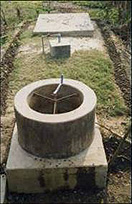
Project Photo 1
Biogas is produced through an anaerobic digestion of cattle dung in a biogas digester and contains a mixture of methane, carbon dioxide, and small amounts of other gases (Photo: World Bank)
Project Description:
The Biogas project aims to develop biogas use as a commercially viable, market-oriented industry in Nepal by bringing fuel for cooking and lighting to rural households. Between 2004 and 2009, the project will install 162,000 quality-controlled, small-sized biogas plants in the Terai, Hill and Mountain regions of Nepal. The estimated useful life of a biogas plant is 20-years and its rate of successful operation has been 97%.

The provision of subsidies has been a key element in making these biogas plants accessible to poor households. Revenue from the CDCF will reduce the dependency on large government and external donor subsidies, and help expand the biogas installation to more remote and poorer areas of Nepal. These biogas plants displace traditional fuel sources for cooking-fuel wood, kerosene, and agricultural waste-and introduce a proper treatment of animal and human wastes as well as produce a high quality organic fertilizer. Each biogas plant can reduce 4.6 tons of carbon dioxide equivalent (tCO2e) annually. The project will generate a total of approximately 6.5 million tCO2e during the crediting period of 10 years. The CDCF expects to purchase a minimum of 1 million tCO2e with the potential of additional purchase.

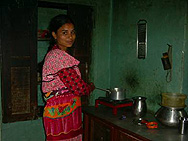
Project Photo 2
One community benefit is the reduction in kitchen smoke which will improve indoor air quality leading to improved health primarily for mothers and children (Photo: World Bank)
Current Context:
Nepal is a small land-locked country with a population of 23 million people, more than 90% of whom live in rural areas, and rely on agriculture for their livelihoods. Nepal is one of the world's poorest countries-in 2004 per-capita income was US$240. Only 10% of households are connected to the power grid. In rural areas, most energy used comes from traditional fuel such as fuel wood and animal dung. The dependence on fuel wood has contributed greatly to deforestation resulting in a scarcity of fuel wood and widespread erosion. Fossil fuel such as kerosene is expensive for many rural people. The villagers, in particular women, often spend hours collecting fuel wood in order to cook a proper meal each day.

Community Benefits Plan:
Consultations have taken place between the Biogas Support Program, BSP-Nepal, biogas companies, NGOs and householders. Householders are involved from the beginning of the process in order to understand their needs, the possibilities of the technology and where to locate it. The Biogas-Support Program also involves NGOs to disseminate information about the benefits of biogas plants.
    Deliverables: latrines attached to biogas plants; reduction in kitchen smoke; reduction in incidence of disease; improved agricultural yields; employment creation; timesaving for women; reduction in firewood consumption
    Timeframe: 2004-2009
    Cost: to be determined
Deliverables Description
Latrines Families are encouraged to construct a latrine attached to the biogas digester. The addition of human waste to the process will increase gas production by 15-20%. It will also improve local sanitation, hygiene, and reduce the incidence of disease.
Reduction in pollution Kitchen smoke is the main factor in indoor air pollution. By using the new biogas fueled stoves, indoor air pollution is dramatically reduced.
Lower incidence of disease Installing latrines and biogas fueled stoves will lower the incidence of common diseases such as eye infections, respiratory disease, smoked induced coughs; diarrhea; dysentery and parasites among both adults and children
Improved agricultural yields Applying bio-slurry, the byproduct of biogas production will improve soil fertility and increase agricultural output. A side benefit is reduced use of chemical fertilizers, saving money and the environment.
Employment creation Construction of the biogas plants generates both part time and full time work. BSP estimates that for every 100,000 plants, about 10,000 masons, laborers and other employees are permanently employed.
Timesaving for women Fuel wood collection is an exhausting, time consuming exercise. BSP estimates that women save three hours daily per household using biogas for cooking versus cooking with collected fuel wood. The saved time is used for activities both at home such as child-care and outside the home, such as literacy training, or participation in community organizations.
Reduction in firewood consumption The biogas fuel for cooking has resulted in reduced pressure on native forests for fuel wood. Users' survey data indicates that household fuel wood consumption was reduced by about 50% in both the Hill and Terai regions of Nepal following installation of biogas plants.

Monitoring Plan:
A set of indicators has been developed to monitor the community benefits from project implementation. To verify the satisfactory delivery of community benefits the monitored indicators will be compared with baseline values.

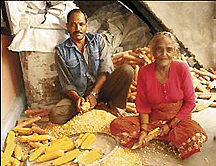
Punyadumari Sanjel (Photo: World Bank)
“The new stove is cleaner, faster and more reliable. Before, smoke used to irritate my eyes, and nose and lungs, and I had less energy. Now I don’t have any of these problems. Before I used to spend three hours preparing a meal. With the new stove I spend half that time. Now I can use that extra time to do other things at home.”
—Punyadumari Sanjel, age 70


Legal Disclaimer