Argentina: Olavarría Landfill Gas Recovery
UNFCCC Reference No.: 0140
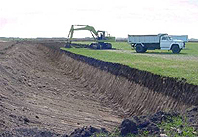 |
Municipality of Olavarría will bid out the construction and operation of LFG capture system to private entities (Photo: UNCPBA) |
Project Description:
The town of Olavarria with a population of about 100,000 is located in the province of Buenos Aires, 350 kilometers southwest of the capital city Buenos Aires in Argentina. This project aims to capture and destroy the landfill gases through flaring at Olavarria's sanitary landfill where the town's solid waste is disposed. An active collection system will be installed at the landfill, consisting of gas extraction wells, collection piping, mechanical blowers, landfill gas condensate and flare systems, as well as a monitoring and control system. The resulting reductions in landfill gas emissions, a total of 131,000 tons, will be sold to the CDCF.
Current Context:
Although Argentina's economy has stabilized after the recent economic crisis, 46% of the population is living in poverty. The number of extreme poor is twice the country's pre-crisis level. The rural village of Espigas, 80 kilometers from Olavarria, is typical of the present rural poverty. It will be the beneficiary of the project's community benefits plan. Right now 80% of the 550 villagers use manual pumps to get water from shallow, often contaminated wells, and only 20% can afford the $10 a month it costs for trucked-in potable water. Gastrointestinal diseases from the bad water are prevalent, especially among children, and the village doctor says the growth of young children is hampered by this problem.
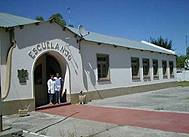 |
Community Benefit: Solar water heating systems will be installed at the elementary and high schools replacing current use of wood and containerized gas for water and space heating (Photo: UNCPBA) |
Community Benefits Plan:
Extensive consultations were held with community leaders under the jurisdiction of the Municipality of Olivarria. As a result, the provision of potable water in Espigas was found to be the most pressing need. As part of the emission reductions contract the project will install a safe and reliable distribution system for potable water in Espigas, which will consist of two 60 meter deep wells, submersible electric water pumps, a 50 cubic meter storage tank, 4000 meters of pipe network to distribute the water by gravity throughout the village, water monitoring equipment and a treatment plant. As well, two solar water heating systems will be installed to supply hot water to the elementary school and the high school in Espigas.
Deliverables: water distribution network; solar water heating systems;
Timeframe: 2006
Cost: $143,000
| Deliverables |
Description |
| Water Distribution Network |
The public water pipes will be laid up to the "municipal line" and each household or public institution will be responsible for their own connections to the public line. When completed in 2006, the system will serve 150 households, a kindergarten (34 children), an elementary school (125 students), a high school (119 students), a hospital (40 beds), a social and sports club, and a cultural center. Residents will pay a monthly user fee of about $3.00. |
| Solar Water Heating Systems |
At least 10 flat solar panels will be installed in the two schools, as well as an insulated water tank, a control system and a circulation system. The solar systems will be integrated into the current propane based hot water system. |
Monitoring Plan:
Ongoing implementation and benefits will be measured through the monitoring of several indicators compared against a baseline. Indicators include the number of households and people connected to the water distribution network; number of patients with gastrointestinal disease treated at the municipal hospital; number of students benefiting from the water heating system; and number of new solar systems installed over the lifetime of the project. Payments for emission reductions to the project are dependent on the delivery of the agreed community benefits.
|


