Brazil: Reforestation Around Hydro Reservoirs
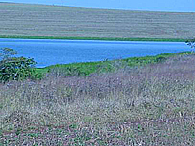 |
In the absence of the project, the area will remain grassland, as it has since colonial times (Photo: AES-Tietê S/A) |
The objective of this project is the recuperation of native vegetation cover of approximately 5,576 hectares, located around four reservoirs created by hydroelectric plants in the State of Sao Paulo, and their establishment as a conservation area. The purpose of the planting is to regenerate forested areas, protect the recreational use of the area, and improve value of the lands for tourism. The land is owned by AES-Tietê, a private company working in the energy sector with 10 operating hydroelectric plants in the State of São Paulo. The project will be established only within its property. The area was deforested in colonial times and is currently grassland. Planting of around 500 hectares per year is planned, finalizing the reforestation process in approximately 10 years, around 2015. Reforestation will be carried out with a mix of native species, so as to replicate the forest species existing in the area. The project developer has submitted new methodologies for baseline and monitoring to the CDM Executive Board. They have been referred back to the Afforestation/Reforestation Working Group asking them to work with the Methodological Panel. The project team is currently improving the documentation through a specific task force.
The project is expected to sequester 0.67 Mt CO2e by 2012 and 1.66 Mt CO2e by 2017. It envisions a medium- and long-term strategy to preserve environmental and hydraulic resources, while also securing the biodiversity of the region. Additionally, the project will enhance the biodiversity corridors connected to other forested conservation areas around the reservoirs, helping to ensure the quality of life of the plant and animal communities that benefit from them. AES will receive the carbon revenues, but the planting will bring social benefits that are likely to be shared throughout the local communities. Almost the entire budget for the project will go to local businesses and jobs. The project requires the creation of a seed and seedling greenhouse and will employ and form local workers to staff the greenhouse and plant and take care of the seedlings. About 200 jobs will be created, and the staff trained to develop the seedlings might find their services required even upon completion of the project if the State's reforestation plan moves forward. Also, the reservoirs are used for recreation and the replanting of these areas with native forests is expected to help improve tourism revenues which also benefit the local communities nearby.
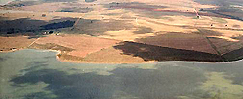 |
Aerial view of one of the reservoirs, in which the lack of forest cover is obvious (Photo: AES-Tietê S/A) |
No logging will be carried out in these new forests whose sole purpose is conservation. Although the project is additional and there is no direct financial benefit to AES through the project and the subsequent conversion of the land into a conservation area, AES has an interest to ensure that the land-use does not change in a way that would be detrimental to its operations. For example, in the absence of the project, informal settlements on the land area might destroy the existing grassland and dramatically increase soil erosion into the reservoir. By planting trees and creating a permanent conservation area recognized by the State Government, the potential of informal settlements is greatly reduced, diminishing the potential harm from land-use changes to AES's operations. The project area is currently uninhabited and unused, and therefore leakage from the project is very unlikely.
The project is sponsored by AES-Tietê S/A, who has also engaged in numerous tree planting activities in the past. Quality Tonnes, a private company that has already worked on numerous projects with the World Bank Carbon Funds, is the project developer.
THEMATIC INFORMATION
For more information on this project's thematic information (i.e., Biodiversity, Other Environmental Benefits and Risks, Socio-economic benefits and risks, Leakage, Risk of Non Permanence, and Additionality), please click here.
|


