Nicaragua: Futuro Forestal Nicateca
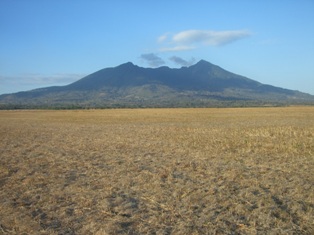 |
Land purchased for the project |
The Project will involve the reforestation over a 5-year period of 12,000 hectares of land on Nicaragua’s Pacific coastal plains, all of which had been previously deforested for use as pastoral grazing land or low intensity cropping. The project should plant about 10,000 hectares of productive forest for commercial harvest, mainly with teak and other tropical hardwoods, and reserve about 2,000 hectares of protective forest not for harvest. The Project is expected to be an important part of the reforestation of under-utilized land in Nicaragua and will set a precedent in the sustainable development of the forestry industry in Nicaragua and should have significant developmental impacts including: 1) The reforestation of previously degraded and/or underutilized land; 2) Creating significant long-term permanent and seasonal employment in rural Nicaragua; 3) Transferring forestry skills and knowledge to local staff and contractors that can be used to support the wider development of the forestry sector in Nicaragua in an environmentally and socially sustainable manner; and 4) Encouraging and supporting the sustainable development of the forestry sector in Nicaragua.
Total sequestration would equal 4 Mt CO2e by 2017 (including 1.6 Mt CO2e by 2012). The majority of the land that has so far been purchased for the project contains large segments of pasture land left in a semi-abandoned fallow stage by the owner, usually wealthy cattle ranchers with large amounts of land. Considering the most recent economic and agricultural developments of the regions where the project is being implemented, it appears unlikely that the lands used for the project activity would be used for other purposes than subsistence agriculture and/or extensive cattle ranching. The economy of Nicaragua is still recovering from years of conflict and from an unattractive investment climate for foreign investors, and there are little economic alternatives in the countryside of Nicaragua beside those offered by the agricultural sector. Without the proposed project activity, the project lands would most likely be used for low-productivity subsistence agriculture or extensive cattle ranching activities and/or would remain abandoned (permanently) or semi-abandoned, rotating in shifting cultivation cycles over large land areas.
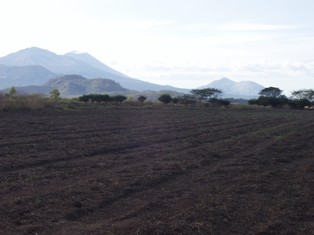 |
Possible land acquisition for the project |
Futuro Forestal (www.futuroforestal.com) is the project developer. It is a private German-Panamanian Reforestation and Forest Services Company that has spent the last 10 years developing and refining an innovative model for ecologically and socially sustainable reforestation in the tropics. Investors in Futuro Forestal have so far been able to elect to acquire carbon credits from their plantations to offset their carbon footprint, or instead let Futuro Forestal sell the carbon credits. Futuro Forestal has reforested over 800 hectares of pasture land in Panama. Futuro Forestal S.A. has now also established an office and management team in Managua to manage the Project in Nicaragua, as well as recruiting and training teams to prepare the plantations for the first planting. Futuro Forestal S.A. is certified under the Forest Stewardship Council (FSC).
Total Project Emission Reductions Generation tCO2e – 1,000,000
|


