|
|
|
 |
|

|
|
For Media Inquiries Only, Please contact the Carbon Finance Unit's Senior Communications Officer, Anita Gordon at:
|
Email: agordon@worldbank.org
|
|
|
|
|

|
|
 |
|
 |
 View Archives
03.01.2005 Community Development Carbon Fund Gets Unexpected Boost; Public & Private Partners Invest $128 Million
WASHINGTON, March 1, 2005—Less than 18 months since its inception,the World Bank Community Development Carbon Fund (CDCF) today announced that 25 public/private participants closed the first round of financial commitments at $128 million—far beyond the original $100 million projected target. The beneficiaries will be the poorest countries on the planet, which until now have been by-passed by the emerging carbon emissions trading market. View Archives
03.01.2005 Community Development Carbon Fund Gets Unexpected Boost; Public & Private Partners Invest $128 Million
WASHINGTON, March 1, 2005—Less than 18 months since its inception,the World Bank Community Development Carbon Fund (CDCF) today announced that 25 public/private participants closed the first round of financial commitments at $128 million—far beyond the original $100 million projected target. The beneficiaries will be the poorest countries on the planet, which until now have been by-passed by the emerging carbon emissions trading market.
View Press Release
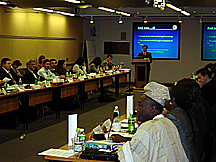 03.01.2005 The Host Country Committee Meeting, Washington DC February 15-16, 2005
More than 80 participants representing 40 host countries, donor countries, carbon finance experts, international institutions and WB staff attended the annual meeting of the Host Country Committee on Carbon Finance, which was held in Washington, D.C. February 15-16, 2005. The two day meeting provided an opportunity for host countries to provide advice to the Bank on its Carbon Finance Business and to exchange lessons learned to promote their full participation in the carbon market. The meeting also discussed expectations and next steps for Carbon Expo, the trade fair and conference organized jointly with the International Emissions Trading Association and Koelnmesse, which will be held in Cologne, Germany, May 11-13, 2005.
The Host Country Committee nominated members to the advisory groups to the various carbon funds and established a sub-committee to further the dialogue on pricing issues.
A meeting of potential donors to the CF-Assist program followed on February 17, 2005. CF-Assist is the Bank's capacity building and technical assistance program on carbon finance dedicated to enable participating countries to fully access the carbon market.
How to be a member of the World Bank Carbon Finance Host Country Committee (HCC):
In order to become a member of the Host Country Committee, a country must be a member of the World Bank Group, and meet either of the two conditions that follow:
The first way comes about through the project process. When a project is under development in a country, the World Bank typically asks that country for a Letter of Endorsement or at least a Letter of No Objection. Receipt of this Letter serves the purpose of indicating to the Carbon Finance Business that the country supports the project so far, or at least does not have any major problems (for the Letter of No Objection). Since the country's formal approval is needed later for the emissions reductions to be registered, it is helpful to see if the country is on board early on. It also signals the formal beginning of a relationship, whereby this Host Country as an involved party and Stakeholder is invited to sit on the Host Country Committee.
The second way a country may become a HCC member is by signing a Memorandum of Understanding (MoU) with the World Bank. This document expresses the country's interest in hosting carbon finance projects, though perhaps none are yet under development there. This method of joining by MoU encourages wider involvement by countries that might host projects later, and allows for their valuable input as to what matters from the Host Country perspective before they in fact host a project.
Host Country Committee Meeting Agenda and Presentations
02.28.2005 Natsource Announces Launch of the Greenhouse Gas Credit Aggregation Pool
"New York, London, and Tokyo – February 28, 2005 – Natsource LLC announced today that its wholly owned subsidiary, Natsource Asset Management Corp. (NAM Corp), has launched the Greenhouse Gas Credit Aggregation Pool (GG-CAP). GG-CAP is the world’s first operational private sector mechanism designed to help corporates and governments manage their GHG compliance requirements. GG-CAP will purchase and manage the delivery of a large pool of GHG emission reduction (ERs) that GG-CAP Buyers can use to comply with EU ETS and KP emission reduction requirements." 03.01.2005 The Host Country Committee Meeting, Washington DC February 15-16, 2005
More than 80 participants representing 40 host countries, donor countries, carbon finance experts, international institutions and WB staff attended the annual meeting of the Host Country Committee on Carbon Finance, which was held in Washington, D.C. February 15-16, 2005. The two day meeting provided an opportunity for host countries to provide advice to the Bank on its Carbon Finance Business and to exchange lessons learned to promote their full participation in the carbon market. The meeting also discussed expectations and next steps for Carbon Expo, the trade fair and conference organized jointly with the International Emissions Trading Association and Koelnmesse, which will be held in Cologne, Germany, May 11-13, 2005.
The Host Country Committee nominated members to the advisory groups to the various carbon funds and established a sub-committee to further the dialogue on pricing issues.
A meeting of potential donors to the CF-Assist program followed on February 17, 2005. CF-Assist is the Bank's capacity building and technical assistance program on carbon finance dedicated to enable participating countries to fully access the carbon market.
How to be a member of the World Bank Carbon Finance Host Country Committee (HCC):
In order to become a member of the Host Country Committee, a country must be a member of the World Bank Group, and meet either of the two conditions that follow:
The first way comes about through the project process. When a project is under development in a country, the World Bank typically asks that country for a Letter of Endorsement or at least a Letter of No Objection. Receipt of this Letter serves the purpose of indicating to the Carbon Finance Business that the country supports the project so far, or at least does not have any major problems (for the Letter of No Objection). Since the country's formal approval is needed later for the emissions reductions to be registered, it is helpful to see if the country is on board early on. It also signals the formal beginning of a relationship, whereby this Host Country as an involved party and Stakeholder is invited to sit on the Host Country Committee.
The second way a country may become a HCC member is by signing a Memorandum of Understanding (MoU) with the World Bank. This document expresses the country's interest in hosting carbon finance projects, though perhaps none are yet under development there. This method of joining by MoU encourages wider involvement by countries that might host projects later, and allows for their valuable input as to what matters from the Host Country perspective before they in fact host a project.
Host Country Committee Meeting Agenda and Presentations
02.28.2005 Natsource Announces Launch of the Greenhouse Gas Credit Aggregation Pool
"New York, London, and Tokyo – February 28, 2005 – Natsource LLC announced today that its wholly owned subsidiary, Natsource Asset Management Corp. (NAM Corp), has launched the Greenhouse Gas Credit Aggregation Pool (GG-CAP). GG-CAP is the world’s first operational private sector mechanism designed to help corporates and governments manage their GHG compliance requirements. GG-CAP will purchase and manage the delivery of a large pool of GHG emission reduction (ERs) that GG-CAP Buyers can use to comply with EU ETS and KP emission reduction requirements."
View Press Release
02.25.2005 TERI, IETA and World Bank host GHG Forum in India Feb 1-2, 2005
The Delhi GHG Forum 2005 was organized by a partnership of The Energy and Resources Institute (TERI), the International Emissions Trading Association (IETA), the Word Bank's Carbon Finance Unit, the World Business Council for Sustainable Development (WBCSD), and Canada's CDM and JI Office. The Forum took place at the Hotel Grand, Vasant Kunj, New Delhi on February 1-2, 2005.
View Report
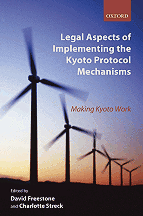 02.22.2005 Book Launch: Legal Aspects of Implementing the Kyoto Protocol Mechanisms - Making Kyoto Work
Edited by David Freestone, Deputy General Counsel, Advisory Service, Legal Vice Presidency, the World Bank and Charlotte Streck, Director, Climate Focus B.V.
Essential reading on 'Carbon Finance' 02.22.2005 Book Launch: Legal Aspects of Implementing the Kyoto Protocol Mechanisms - Making Kyoto Work
Edited by David Freestone, Deputy General Counsel, Advisory Service, Legal Vice Presidency, the World Bank and Charlotte Streck, Director, Climate Focus B.V.
Essential reading on 'Carbon Finance'
Drawing on the emerging body of expertise in this complex area, this book conveys a knowledge of what is becoming known as 'Carbon Finance' - the international trade of emission allowances. It thereby aims to contribute to the development of the market for carbon emission reductions - one of the objectives of the Kyoto mechanisms.
To order a copy go to: http://www.oup.co.uk/isbn/0-19-927961-6
02.22.2005 Carbon Expo Press Release
Cologne, February 22, 2005—CARBON EXPO 2005, the world's only trade fair and conference for emissions trading and the carbon market, will open its doors on 11th May in Cologne. The three-day event will be a platform for boosting efforts of mitigating climate change impacts around the world through the use of market based mechanisms.
As the Kyoto Protocol for global climate protection came into force, the event is attracting more interest than ever from private sector representatives, including energy-intensive industries. The Kyoto Protocol is aimed at reducing greenhouse gases by at least five per cent by 2012 in comparison to 1990 levels.
More than 100 exhibitors, some 1,000 trade visitors and conference participants from more than 50 countries are expected to come to Cologne? , said Koelnmesse Executive Vice President Wolfgang Kranz. Koelnmesse's.
Partners for the event are the World Bank and the International Emissions Trading Association (IETA), a non-profit industrial association.
According to Ken Newcombe, Manager of the Carbon Finance Business Unit at The World Bank, ?The most important issue right now is ensuring supply from the developing countries of emission reductions, because the demand has suddenly increased enormously as companies in Europe received their targets for emissions reductions and European Governments like Spain, Italy and
Denmark have entered teh market on a large scale. If as expected Canada and Japan also ramp-up there demand for developing country emissions reductions there will be a supply crunch that will need special efforts in market development to overcome.
The industrialised countries committed themselves at the UN Climate Protection Conference in Kyoto in 1997 to a programme for reducing emissions of greenhouse gases (GHG) .After Russia formally ratified the agreement on 18th November 2004, the Kyoto Protocol came into force on 16th February 2005. A total of 141 countries have ratified the agreement to date. Together, they account for 61.6 per cent of the CO2 emissions produced by the industrialised countries in 1990. Both the Kyoto Protocol and the European Union?s Emissions Trading Scheme make use of flexible mechanisms by which rich countries can buy emission reductions through climate-friendly projects in developing countries and count those reductions as part of the Protocol?s established targets.
For information about participating in the trade fair and conference, as well as travel arrangements, accommodation, presentation packages for exhibitors and trade fair services available in Cologne, call the hotline on +49 (0)221/821 3097, fax +49 (0)221/821 3098, or e-mail carbonexpo@koelnmesse.de. Alternatively, visit the website at www.carbonexpo.com.
02.16.2005 Kyoto Protocol Enters into Force
Washington, February 15, 2005—With the Kyoto Protocol coming into force, government officials and private sector leaders from industrialized and developing countries around the world, commended this week the role of the World Bank in facilitating the development of a viable carbon market.
The World Bank is meeting this week with its 45 country advisory group to discuss ways of catalyzing a supply response in developing country markets that will galvanize new investment in clean climate-friendly technology over the next two years.
View Article
01.31.2005 Operations Evaluation Department (OED) Releases Independent Review of the PCF
The Operations Evaluation Department (OED), an independent evaluation office within the World Bank, has reviewed the design, implemention, and evaluation of the Prototype Carbon Fund. The full report can b read here.
12.22.04 World Bank Ready To Allocate Grants For Ecological Projects In Russia
The World Bank is ready to allocate grants for the implementation of ecological projects in Russia, the World Bank director for Russia, Kristalina Georgieva, told the Russian Prime-Tass news agency on Monday. According to the Bank official, several funds exist within the World Bank with a total amount of $800 million, which extend grants for ecological projects. Such projects are actively implemented in Latin American countries, she said.
View Press Release
12.21.04 Ecuador Enters the Greenhouse Gas Reductions Era with Two Run-of-River Hydropower Projects
COP10, Buenos Aires ARGENTINA, December 16, 2004—Ecuador became a participant in the growing carbon market today with the signing of its first two emission reductions purchase agreements under the Clean Development Mechanism (CDM) of the Kyoto Protocol. The agreements were signed at the 10th Meeting of the Conference of the Parties of the Kyoto Protocol (COP10) being held in Buenos Aires this week.
View Press Release English / Spanish
12.17.04 European Investment Bank and World Bank Agree to Develop the “Pan-European Carbon Fund”
Luxembourg and Washington, December 17, 2004—The European Investment Bank (EIB) and the World Bank signed Thursday a Memorandum of Understanding (MoU) in which the two organizations agreed to cooperate in the development of a Pan-European Carbon Fund (PECF).
The PECF would be designed to help European countries meet their commitments to the Kyoto Protocol, which will enter into force early next year, and the European Union’s Emissions Trading Scheme (EU ETS), which will begin in January 2005.
View Press Release
12.14.04 2004 PCF and CDCF Annual Reports Now Available
To request a printed copy of either report, please contact the Help Desk. To download an electronic version, click either 2004 PCF Annual Report or 2004 CDCF Annual Report.
12.14.04 The BioCarbon Fund will no longer be reviewing PINs effective immediately
Note to project proponents wishing to submit land use, land-use change and forestry (LULUCF) project proposals: The World Bank as Trustee of the BioCarbon Fund has received 130 PINs and we will no longer be reviewing new PINs effective immediately (12/14/2004). Any change will be announced on the website.
12.10.04 Landfill Gas Recovery Project in Argentina is Helping to Turn Gas from Garbage into Development Benefits
Olavarría, Argentina, December 9, 2004—The people of Olavarría in the province of Buenos Aires are seeing first hand, the development benefits that are possible under the Clean Development Mechanism (CDM) of the Kyoto Protocol, with the signing of the first carbon finance agreement in Argentina today-the Olavarría Landfill Gas Recovery Project. It is a project that signals the vast potential of landfill gas recovery projects throughout the developing world.
View Press Release Word or HTML
12.10.04 The Philippines: Wind Power through Carbon Finance
MANILA, PHILIPPINES, December 9, 2004—The Philippines today took a major and innovative step into a new renewable energy era with the signing of the first greenhouse gas emission reductions purchase agreement (ERPA) for a wind farm project in the ASEAN region, under the Clean Development Mechanism (CDM) of the Kyoto Protocol. The wind farm project has a total cost of about US$35 million, with almost 90 percent funded by the Danish International Development Agency (DANIDA). The project is expected to be operational by mid 2005.
View Press Release
12.03.04 Poechos Hydropower Project is First Peruvian Greenhouse Gas Emission Reductions Project Signed Under the Clean Development Mechanism of the Kyoto Protocol
Piura, Sullana Province, Peru, December 1, 2004—Peru became a participant today in the growing carbon market with the signing of its first emission reductions purchase agreement under the Clean Development Mechanism (CDM) of the Kyoto Protocol. Peru signed and ratified the Kyoto Protocol in an effort to reduce its greenhouse gas emissions. The project will be the first carbon transaction for Peru—Poechos entails the addition of 15.4 megawatts of hydropower generation to the existing 48 meter high Poechos Dam.
The Poechos Hydropower Project developer is SINERSA (Sindicato Energetico S.A.) a private company which had previously already developed another hydropower plant in the region. The certified emission reductions generated by the project will be purchased by the Netherlands CDM Facility (known as the NCDMF). This Facility, established under an agreement signed between the State of the Netherlands, acting through the Ministry of Housing, Spatial Planning and the Environment (VROM) and the World Bank, authorizes the World Bank, as Trustee, to purchase greenhouse gas emission reductions from projects on behalf of the Netherlands The NCDMF will purchase an average of 33,300 tons of carbon dioxide equivalent for each of the first nine years of project operation for a total of 300,000 tons.
12.02.04 China to Reduce Greenhouse Gas Emissions from Coalmine Methane Through 'First of' Initiative
Beijing, People's Republic of China, December 2, 2004—The People's Republic of China has signed the first ever greenhouse gas emission reductions purchase agreement (ERPA) for a coal mine methane project. Over 60 percent of China's energy needs are met by coal, but methane from coal mines, is one of the world's largest greenhouse gas emitters on a stand-alone gas basis eight percent of the entire worldwide emissions. Coalmine methane (CMM) is twenty-three times more powerful than carbon dioxide at affecting global warming.
The Jincheng Project will produce tangible benefits for the local population. Shanxi province, located in northwestern China, is the center of the country's coal mining industry. Economic and employment conditions in Shanxi are heavily coal-dependent the Sihe mine alone employs 27,000 people in Jincheng City. This project will improve conditions at the mine for current employees, and create 60 new jobs for re-trained miners and additional specialist staff at the power project. The project will also help improve the safety of miners by establishing a better way to eliminate explosive methane from the mine.
"The success of signing of this ERPA serves as a model case for further promotion of similar CDM activities in China," said Madam Sun Cuihua of the National Development and Reform Commission for China's (NDRC's) Climate Change Office. "I wish to convey my gratitude to the people involved for this success"
View Press Release
11.23.04 Options for Designing a Green Investment Scheme for Bulgaria
PCFplus Research Report prepared by the World Bank Energy and Infrastructure Department Europe and Central Asia Region and the Carbon Finance Unit.
This report examines the various issues surrounding the "Greening of Assigned Amount Units (AAUs)" with a view to provide recommendations to the Government of Bulgaria and interested parties on considerations and approaches for a potential transaction involving a sale of AAUs and implementing a green investment scheme in Bulgaria. The report has been prepared by the World Bank upon request of the Government of Bulgaria.
View Report
11.18.04 Brazilian Landfill Gas to Energy Project Makes History as First Greenhouse Gas Reduction Project Registered Under the Clean Development Mechanism of the Kyoto Protocol
View Press Release
11.15.04 Will the Kyoto Protocol Affect Growth in Russia?
A World Bank Working Paper by Franck Lecocq and Zmarak Shalizi
In light of the argument that rapid economic growth in Russia over the next decade might result in emissions higher than the Kyoto target, thereby putting much-needed growth at risk, Lecocq and Shalizi revisit the discussion on the costs and benefits of ratification of the Kyoto Protocol by Russia. They conclude that even under a very high economic growth assumption, and even under very conservative assumptions about the decoupling between carbon dioxide emissions and economic growth, Russia still benefits from a net surplus of emissions allowances, and thus will not see its growth adversely affected by the Kyoto target. In addition, a review of the possible costs and benefits of the Kyoto Protocol suggests that the potential sale of excess allowances far outweighs the other costs.
This paper—a product of the Infrastructure and Environment Team, Development Research Group—is part of a larger effort in the group to analyze climate change mitigation and adaptation options.
Read Paper
11.11.04 Joint CDCF - UNEP "Using Carbon Finance to Promote Sustainable Energy Services in Africa"
A steadily growing portfolio of World Bank Carbon Finance transactions' and associated activities are helping establish the carbon markets in developing countries, whose share of project-based transactions has risen to about 95% in 2003 and first half of 2004. Of these, however, very small volumes are associated with projects in Africa. Smaller projects and the poorer countries within Africa are likely to be bypassed as they lack supportive national CDM approval systems and have significantly higher business costs and risks. Most LDCs also suffer from an overall lack of investment in the energy, industrial and waste sectors with the result that even the lowest cost carbon mitigation projects have difficulty raising underlying financing.
The World Bank's Community Development Carbon Fund (CDCF), which is targeted at small countries and poorer areas, seeks to address this market failure by investing a minimum of twenty-five percent of its funds to buy emission reductions from small-scale projects located in LDCs - while building national CDM supportive systems in the process. This is grounded in the experience and belief that there is no better way to build capacity than to implement a first CDM transaction in a country or particular sector of its economy.
Through such a `learning by doing' transaction, a government can be motivated to decide which agency is authorized to act on its behalf and what is needed in terms of changes to legal and institutional frameworks to fully participate in the carbon market. The private sector can similarly recognize the opportunity provided by the carbon market to increase profitability, hedge risk in project finance and attract foreign investment in climate-friendly technologies.
Although efforts to develop CDM transactions in most LDCs have been limited, there are a number of programme platforms that have been operating in target regions on which an operational approach could be built. For the past four years the African Rural Energy Enterprise Development (AREED) programme has been applying a learning by doing approach to supporting the growth of the clean energy sector in five African countries. At the core of AREED is a combination of enterprise development services and seed capital provision that helps entrepreneurs develop, refine and scale-up clean energy products and service offerings. To date 19 enterprises have been financed, in the areas of solar crop drying, waste to energy, biofuels, charcoal briquetting, efficient cook stove manufacture, wind water pumping, LPG, solar water heating and energy efficiency. Although only limited efforts have been made to date to assess carbon mitigation value within the AREED pipeline and portfolio, the potential exists to adapt or merge the AREED project development process to the CDM transaction process.
With the aim of increasing the capacity of host governments to approve and oversee CDM project investments, a second UNEP programme on which to build is the CD4CDM initiative, a Dutch funded effort: that is aimed at developing the capacity of a number of developing countries to establish their institutional CDM infrastructures. This programme has developed a number of tools and approaches for CDM knowledge transfer that can be applied in other countries and programmes.
The World Bank is also implementing a capacity building program called CF-Assist, to enable developing countries and economies in transition to fully participate in the carbon market. The programme has a modular approach, and includes technical assistance for specific projects, a training program based on the lessons learned as a major buyer of emission reductions, and various tools to enhance the capacity of the private sector to bring projects to the market and of governmental institutions to implement effective project approval procedures.
A consensus has emerged that a special effort to ensure an equitable sharing of the benefits of carbon finance will be required in Africa. A partnership between selected African countries, regional and international organizations, donors, and civil society would support critical "learning-by-doing" capacity building organized around specific transaction opportunities. The main aims would be to identify and build the capacity of intermediaries that can reduce transaction costs and increase dialogue among NGO, private sector and public sector stakeholders in devising policies, institutional frameworks, market access strategies, and CDM project portfolios.
A concerted programme that brings together the different carbon elements and actors is needed to help kick-start CDM project activity in the target countries. It is proposed to use a multidisciplinary approach that builds off of existing tools and organisational capacities, and channels resources to the countries and projects that show the most promise for achieving project closure and implementation. In each country the programme implementation strategy will involve 1) strengthening the capacity of local carbon experts, co-financiers and governmental authorities to engage in carbon project activity and 2) putting "theory into practice" by working with a number of project developers on specific promising carbon transactions.
11.11.04 The IIC Grants a US$7 Million Loan to Build a Hydropower Plant in Ecuador
Article published on the Inter-American Investment Corporation (IIC) website on October 22, 2004.
Read Article
11.01.04 CF-Assist in Mexico
CF-Assist is both a technical assistance facility with its own donor constituency and work program as well as an umbrella program providing coordination and synergy for all World Bank activities in the area of technical assistance for carbon finance.
The experience from the World Bank Carbon Funds has shown that one of the most significant barriers to the delivery of high volumes of emission reductions through the CDM and JI remains the ability of public sector institutions in developing countries to have clear, transparent and timely project approval procedures.
Mexico made a significant step at the beginning of this year, creating the DNA and establishing the procedures to approve projects under the CDM. This assistance seeks to review those processes and to help the Mexican DNA to improve, when it is possible, those procedures and the coordination with the institutions that are part of the process.
The CF-Assist program, will design training materials and deliver training, as much as possible in cooperation with other institutions involved in the region to address any knowledge gap. So far, training modules have been developed in the following areas: project identification and design, baseline and monitoring methodologies, and negotiation of an emission reduction purchase agreement.
The assistance will be financed through CF-Assist with resources provided by the Department of Foreign Affairs, Canada and is expected to begin in November, 2004.
10.22.04 Russia Ratifies Kyoto Protocol
Russia Duma Ratifies Kyoto Environment Pact
Rueters, Friday, 22 October, 2004
Russian MPs ratify Kyoto treaty
BBC News, Friday, 22 October, 2004
Russian Duma Ratifies Kyoto Protocol
CBC News Online, Friday, 22 October, 2004
Russian Duma Ratifies Kyoto Protocol
Voice of America, Friday, 22 October, 2004
09.16.04 Ratification of the Kyoto Protocol by Indonesia
In June 2004, Indonesia’s House of Representatives (DPR) has passed the law enacting the ratification of the Kyoto Protocol to the United Nations Framework Convention on Climate Change (UNFCCC).
On September, 16, 2004, the Indonesian Ministry of Environment, Ministry of Foreign Affairs and Pelangi Indonesia co-sponsored an event in Jakarta to celebrate Indonesia's ratification of the Kyoto Protocol. Other co-sponsors were the World Bank, the Japanese New Energy and Industrial Development Organization (NEDO), and the German Gesellschaft für Technische Zusammenarbeit (GTZ, the German Technical Cooperation Agency).
The objective of the event, attended by more than 100 participants, was to discuss the domestic implications of policy and implementation of the Kyoto Protocol and the National Dialogue that will serve to expand the outreach, start the domestic discussion and discourse, trigger policy development relevant to the Kyoto Protocol, and provide some insights on the implementation at the domestic level. With the ratification, Indonesia stands to attract significant investments in climate-friendly technologies through the Clean Development Mechanism.
08.31.04 Inauguration of Large Scale Biomass Operation in Pécs, Hungary - Sale of carbon credits key to financing coal to biomass conversion
On August 31, 2004, Mr. Laszlo Somosi, CEO of Pannonpower, inaugurated a 50 MW biomass-fired power-plant in the City of Pecs, for Southern Hungary – now the single largest renewable energy plant in Hungary and one of the largest in Europe- which was partly financed through the sale of emission reductions under the Kyoto Protocol on global warming. From this project, the Prototype Carbon Fund will purchase 1.2 million tonnes of greenhouse gas emission reductions and thus contribute to the financial viability of the project.
The project is part of a gradual effort by Pannonpower to provide district heat supply for the second largest system in Hungary using cleaner sources of energy than the traditional coal used since 1962. In response to stricter emission limits to be introduced in 2005, Pannonpower has decided to implement a complex fuel switch and refurbishment project, that includes the conversion of two combined heat and power plants (CHPs) units to gas, to convert one CHP to biomass, and to cease operations in its fourth unit. In using an indigenous and renewable energy source such as wood chips, the biomass-plant reduces local air pollutants (SO2, NOx, CO and particulates) thanks to lower use of coal and contributes to sustainable management of forests through securing long-term, predictable revenue to forestry companies. It is also innovative in that it is partly financed through Joint Implementation (JI) of the Kyoto Protocol, the 1997 international agreement to limit the emissions of climate-altering greenhouse gases. JI allows industrialized countries and companies with greenhouse gas reduction commitments to purchase some of their required emission reductions from other industrialized countries.
“The support of the PCF through the purchase of emission reductions was crucial for the implementation of this project, and should serve as example for the region on how to use carbon finance to finance investments in sustainable sources of energy, ”said Mr. Somosi.
The involvement of the Prototype Carbon Fund (PCF) is through purchase of the emission reductions achieved by the project. Such purchases provide the project sponsor with a predictable revenue stream that increases profit and reduces risk, and this provides considerable support for the implementation of the project. In this way, carbon financing helps projects that benefit the global environment and contribute to sustainable development.
08.05.04 Greenbacks for being green: Nepalis can soon start collecting their reward for not polluting the earth by Navin Singh Khadka
Article published in the July 30 - August 5, 2004 edition of Nepali Times.
Read Article
05.15.04 BioCarbon Fund is now operational
03.30.04 Pécs workout is healthy exercise by Nigel Blackaby
Article published in the February, 2004 edition of Power Engineering International.
Read Article
03.15.04 Trends and Outlook for Global Trading by Franck Lecocq, Development Economics Research Group, World Bank
Article published in the February/March edition of the AETF Review.
Read Article
 03.12.04 Carbon Expo - World’s first trade fair and conference for emissions trading aimed at reducing CO2 03.12.04 Carbon Expo - World’s first trade fair and conference for emissions trading aimed at reducing CO2
In cooperation with the World Bank and the International Emissions Trading Association (IETA), the Carbon Expo will be held from June 9 to 11, 2004 in the Eastern Halls area of the Koelnmesse exhibition grounds. It will be the world’s first trade fair and conference to deal with the topic of emissions trading and the emerging carbon market. The event will not only promote transparency in its role as an information forum but also provide a platform where buyers, sellers, market makers and service providers can meet. It will also offer exhibitors the perfect stage to present technologies for reducing CO2 emissions. For more information visit www.carbonexpo.com
01.16.04 Rio Amoyá Hydro Project Awarded a Global Award on Sustainability
The Rio Amoyá Environmental Services Project is a run-of-river hydropower project with a nominal capacity of 80 MW which is located in the lower range of the Amoyá River Basin in Colombia. Once construction is completed in mid-2005, the project will deliver 568 GWh to the Colombian energy grid, and will displace 5.43 Mmt CO2 in the first 14 years of operation. From the revenues of the emission reductions to be sold to the Netherlands Clean Development Facility, the project will support an environmental program for the protection of the Paramo de Las Hermosas, which is a unique high altitude ecosystem, and a social program that will contribute to improvements in the welfare of the local community in the area of the project.
This project was awarded the first prize in the water category at the Energy Globe Award for Sustainability. Here is the official nomination: http://www.energyglobe.at/energygl/finalisten3/html_en/index.html
|
01.08.04 Press Coverage of the 2003 State and Trends of the Carbon Market Report
Read Report
World Bank Press Release, Milan, Italy, Dec 4/03: Carbon Market Doubles, but Poor Countries Bypassed According to World Bank Report
DowJones, London, Dec 4/03: World Bank Says Carbon trading Vols Double to 70 Million Tonnes
TODAY, World Bank, Dec 3/03
Point Carbon, Dec 4/03: Carbon Trading Tops 70 Million Tons in 2003
Reuters, London, Dec 4/03: Neil Chatterjee
Reuters, Washington, Dec 4/03
Kyodo News, (Washington) Dec 4/03: Greenhouse Gas Emission Trading Surging: World Bank
M2 Presswire, Dec 4/03: Carbon Market Doubles But Poor Countries Bypassed; World Bank Report
Forbes.Com, Dec 4/03: Greenhouse Gas Trading Doubled in 2003; World Bank
Bloomberg News, Dec 5/03: Carbon Market to More than Double This Year, World Bank Says (Jim Osbourne)
Wall Street Journal, Dec 5/03: Emissions Credits See brisk trading Tied to Kyoto Pact (John Fialka)
Financial Times, Dec 5/03: Value of Carbon Trading Doubles in a Year (Vanessa Houlder)
Air Daily, Dec 5/03: Carbon Market Sees Strong growth in 2003
UN Wire, Dec 5/03
Platts Electric Utility Week, Dec 8/03: Carbon trades Doubled Compared to 2002
Platts Coal Outlook, Dec 15/03: Greenhouse gas trading Has Doubled in Past Year, Study Says
Argus Global Emissions, Jan 04.
Danish newspaper, Politiken, Jan 5/04
|
12.10.03 Background Brief - Carbon Sinks, Climate Change and Sustainable Development
Carbon sinks are part of the scope of the Clean Development Mechanism (CDM) of the Kyoto Protocol. Carbon sinks projects benefit the interests of rural communities in developing countries and represent an important tool in the fight against global climate change¾one that can also harness new financial flows for sustainable development. Scientific knowledge and technology exist to enable the preparation and monitoring of carbon sink projects that benefit the climate in the long run. The body of experience is growing.
Read Paper
|
12.04.03 2003 State and Trends of the Carbon Market Report
Franck Lecocq, Karan Capoor, PCFplus Research, World Bank—Based on data and insights provided by Evolution Markets LLC, Natsource LLC, and PointCarbon.
Read Report
|
12.02.03 2003 PCF Annual Report
This is the third annual report of the Prototype Carbon Fund, covering the period from October 2002 through September 2003. The audited PCF financial statements for fiscal year 2003 (July 1, 2002 to June 30, 2003) are included. If you would like a printed copy or CD version, please send a request to the helpdesk and include your mailing address.
Read Report
|
11.26.03 BioCarbon Fund Open for Participant Contributions
The BioCarbon Fund has been approved by the World Bank Executive Board of Directors and opened for Participant contributions on Wednesday, November 26, 2003. It is expected to become operational in June, 2004.
|
View Archives
|
|
 |
|
 |
|
|
|

|
|
|